

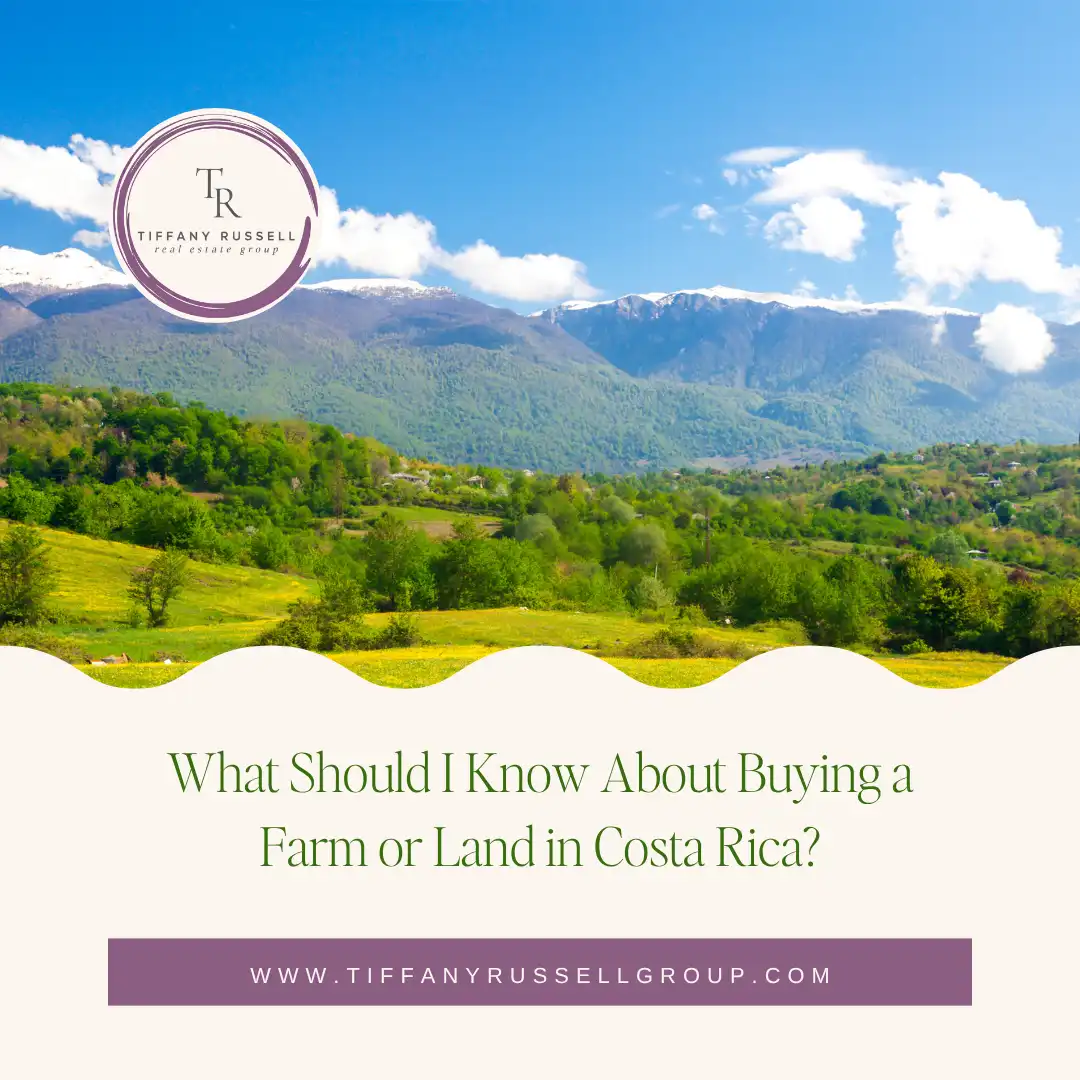
Agricultural and rural land purchases in Costa Rica require a different kind of due diligence.
Farmland, fincas, and rural parcels represent a unique and often underexplored category of the Costa Rica market. Whether the goal is a working farm, a sustainable retreat, or raw land for future development, these properties come with their own legal, environmental, and logistical considerations. Getting them right requires expertise that goes beyond the residential market.
Water rights, access, and agricultural use designations matter significantly.
Unlike a residential lot, rural land in Costa Rica often comes with questions about water source rights, road easements, and how the land is officially designated under the national zoning system. Some parcels have agricultural use restrictions that limit development. Others have water concessions that add value or create complications. A thorough survey and legal review are non-negotiable for land purchases.
Environmental protections and buffer zones affect many properties.
Costa Rica takes environmental stewardship seriously, and that extends to land ownership. Riverine protection zones, forest reserves, and wildlife corridor buffers can affect what a buyer is permitted to build or clear. Understanding these restrictions before purchase – not after – is essential.
The potential is significant for the right buyer.
For buyers who do their homework, rural and agricultural land in Costa Rica represents some of the most compelling value in the market. Whether it’s a horse property in Puntarenas, a sustainable farm in the Southern Zone, or a large parcel for eco-tourism development, TRREG works with buyers to evaluate these opportunities with clear eyes and the right local guidance.
Tiffany Russell Group