

Few conversations feel as emotionally loaded as this one. Many adult children worry about causing conflict, hurting feelings, or being seen as pushy, even when their intentions come from care and concern.
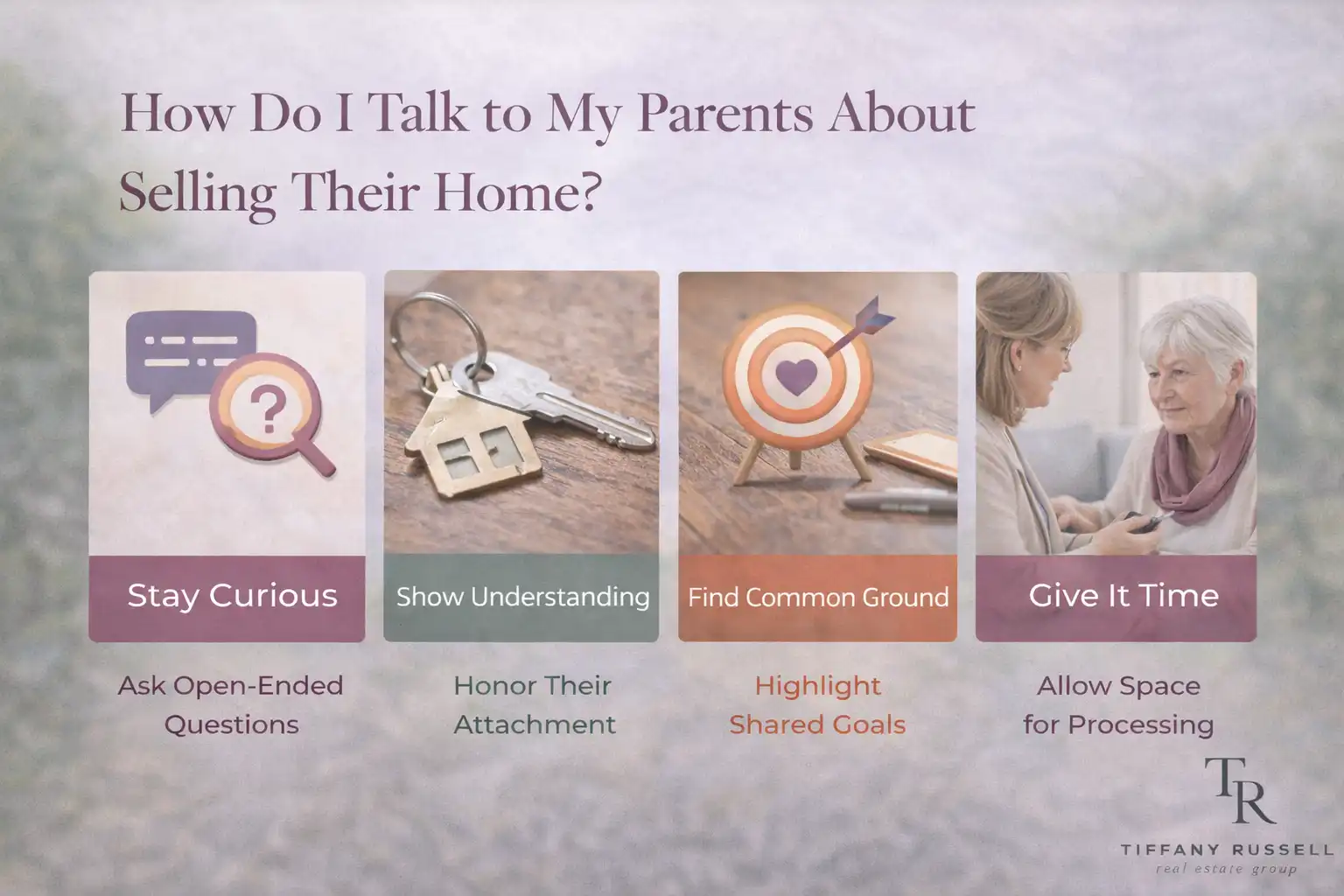
Start with curiosity, not conclusions.
Instead of leading with “You need to sell,” try open-ended questions:
“How is the house feeling for you these days?” or “Have you thought about what you’d want your next few years to look like?” These invite dialogue rather than defensiveness.
Acknowledge what the home represents.
For your parents, this house may symbolize independence, family history, and identity. Recognizing that out loud, “I know this home means a lot to you”, can immediately lower emotional walls.
Focus on shared goals.
For your parents, this house may symbolize independence, family history, and identity. Recognizing that out loud, “I know this home means a lot to you”, can immediately lower emotional walls.
Focus on shared goals.
Most families want the same things: safety, comfort, and less stress. Framing the conversation around quality of life rather than logistics helps everyone stay aligned.
Expect more than one conversation.
This is rarely a single discussion with a clear outcome. Give your parents time to process, revisit the topic gently, and avoid pushing for immediate decisions.
Bring in a neutral professional if helpful.
Sometimes hearing options from an experienced third party, without pressure, helps parents feel informed rather than persuaded.
Handled with patience and respect, this conversation can strengthen trust and open the door to collaborative planning.
Thinking about downsizing? Make informed decisions with our complete Downsizing Guide, packed with practical advice, checklists, and expert insights.